

Due diligence is the part of property buying that protects you from expensive surprises.
A property can look right at inspection, but the real risks may sit in the contract, building condition, zoning, owners corporation records, rental demand or future costs. This is why buyers should look beyond the listing photos, the floorplan and the selling agent’s comments before making a decision.
For first-time investors, Melbourne investors, reinvestors and buyers building a portfolio, due diligence is not just a legal step. It is a way to check whether the property is suitable, fairly priced and aligned with your investment goals.
In simple terms, due diligence means checking the property properly before you commit.
What Is Due Diligence When Buying a Property?
Due diligence when buying a property means reviewing the key legal, financial, physical and market details before signing a contract or bidding at auction.
This can include checking:
- The contract of sale
- The Section 32 vendor statement
- Building and pest condition
- Planning and zoning details
- Owners corporation records
- Comparable sales
- Rental demand
- Future costs
- Finance approval
- Insurance risks
- Any legal or title restrictions
In Victoria, Consumer Affairs Victoria provides a due diligence checklist for residential property buyers. It encourages buyers to make enquiries about issues that may affect the property, including restrictions, planning controls, building permits, bushfire and flood risk, essential services and nearby developments.
Why Due Diligence Matters for Melbourne Buyers
Melbourne is not one single property market. Buying an apartment in the CBD is very different from buying a townhouse in the middle ring, an older house in an established suburb or land in a growth corridor.
Each property type carries different risks.
An apartment may need careful review of owners corporation fees, cladding, building defects, maintenance funds and future special levies.
A townhouse may need checks around shared areas, insurance, drainage, neighbouring properties and owners corporation obligations.
An older house may need deeper review of structure, roofing, plumbing, electrical work, dampness, extensions and building permits.
A growth corridor property may require more attention to infrastructure, transport, future supply, land size, estate rules and long-term tenant demand.
For investors, due diligence is not only about avoiding a bad property. It is about understanding whether the property supports the reason you are buying it.
Property Due Diligence Checklist for Australian Buyers
A useful property due diligence checklist should follow the buying journey, not just sit as one long list. This makes it easier to know what to check and when.
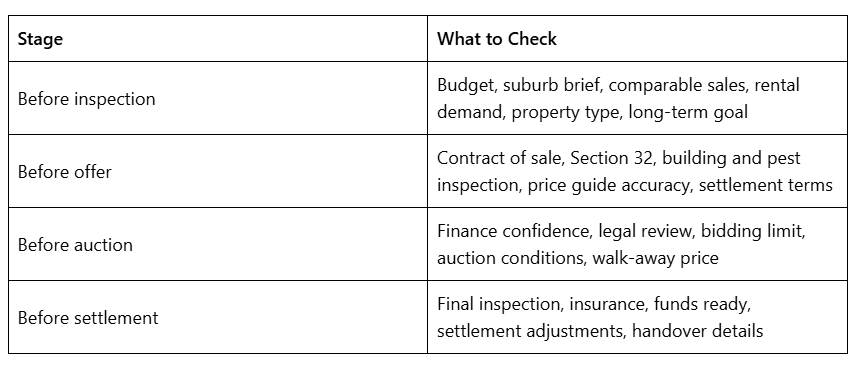
This checklist is especially important for Melbourne buyers because auction campaigns can move quickly. By the time auction day arrives, most of the important checks should already be complete.
Due Diligence Before Auction in Melbourne
Auction due diligence is critical because auction purchases in Victoria are usually unconditional.
Before bidding, buyers should have already reviewed the contract, checked the Section 32, assessed the property condition, confirmed their finance position and decided on a clear bidding limit.
Consumer Affairs Victoria advises buyers to get inspection reports before auction, as buyers generally cannot add conditions to the contract at auction unless the vendor agrees. It also recommends having a legal practitioner or conveyancer check the Section 32 vendor statement and contract of sale before purchase.
Before auction day, buyers should check:
- Whether finance is in place
- Whether the contract has been reviewed
- Whether the Section 32 has been checked
- Whether a building and pest inspection is needed
- What settlement terms apply
- Whether the deposit is ready
- What the absolute walk-away price is
The biggest mistake many buyers make at auction is doing due diligence after they have emotionally decided they want the property. In an auction campaign, the safer approach is to complete the checks first, then bid with discipline.
The Section 32 Vendor Statement
In Victoria, the Section 32 vendor statement is one of the most important documents in the buying process.
It can reveal issues that are not obvious at inspection, such as easements, covenants, planning restrictions, owners corporation details, unpaid rates, building permits, zoning controls or services connected to the property.
These details can affect future renovations, resale appeal, investment performance and the way the property can be used.
A Section 32 may include:
- Title information
- Mortgages or charges over the property
- Easements or covenants
- Planning and zoning information
- Building permits
- Owners corporation details
- Council rates and outgoings
- Services connected to the property
The Section 32 should be reviewed carefully by a conveyancer or solicitor before signing a contract or bidding at auction.
Building and Pest Inspections
A building and pest inspection can help uncover problems that are not obvious during a short open home.
Common issues include:
- Structural movement
- Roof damage
- Water leaks
- Rising damp
- Termite activity
- Poor renovations
- Drainage problems
- Electrical or plumbing concerns
Consumer Affairs Victoria recommends inspecting properties carefully and also provides guidance on professional building and pest inspections before buying.
For investors, this matters because repair costs can quickly affect cash flow. A property with strong rental appeal can still become a poor investment if unexpected maintenance costs are too high.
Investor Due Diligence: What to Check Beyond the Property
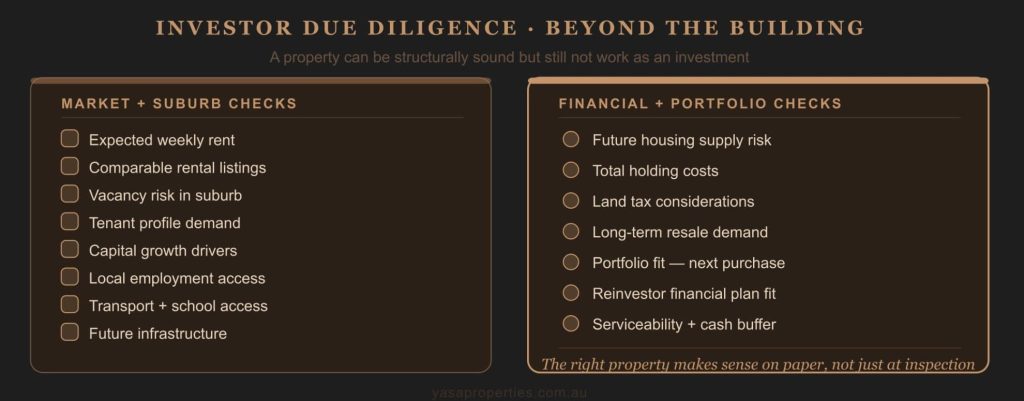
For investors, due diligence should go beyond the building itself.
A property may be structurally sound but still not work as an investment. The suburb may have weak rental demand, too much future supply, limited tenant appeal or poor long-term resale prospects.
Investors should review:
- Expected weekly rent
- Comparable rental listings
- Vacancy risk
- Tenant profile
- Capital growth drivers
- Local employment access
- Transport and school access
- Future infrastructure
- Future housing supply
- Holding costs
- Land tax considerations
- Resale demand
- Portfolio fit
For reinvestors, the key question is whether the investment property supports the wider financial plan while they continue renting elsewhere.
For portfolio builders, the question is whether this purchase helps or limits the next property decision.
Due Diligence for Apartments and Units
Apartments and units need extra checks because the buyer is not only buying the internal space. They are also buying into a building and, in many cases, an owners corporation.
Before buying an apartment or unit, review:
- Owners corporation fees
- Owners corporation rules
- Meeting minutes
- Building defects
- Planned repairs
- Special levies
- Insurance details
- Cladding concerns
- Sinking fund balance
- Short-stay letting rules
- Pet rules, if relevant
- Noise, waste areas and shared access
Consumer Affairs Victoria has a separate checklist for buyers looking at apartments or units, including issues such as noise, odours, shared spaces and owners corporation matters.
A low purchase price can look attractive, but high ongoing fees, defects or special levies can reduce the investment value.
Due Diligence Red Flags to Watch For
Some red flags should make buyers slow down and ask more questions.
These may include:
- Unapproved renovations
- Missing building permits
- High owners corporation fees
- Special levies
- Poor building maintenance
- Major defects in the inspection report
- Evidence of water damage
- Price guide far below comparable sales
- Flood or bushfire overlays
- Restrictive covenants
- Short settlement pressure
- Limited contract information
- Weak rental demand
- High vacancy risk
- Poor resale appeal
A red flag does not always mean you should walk away. It means the risk needs to be understood before you decide whether the property is still worth buying.
How a Buyer’s Agent Can Help With Due Diligence
A buyer’s agent melbourne can help buyers complete due diligence with more structure and less emotion.
For Melbourne buyers, this may include:
- Filtering out poor-fit properties earlier
- Comparing recent sales
- Reviewing suburb fundamentals
- Assessing fair market value
- Coordinating building and pest inspections
- Working with conveyancers and brokers
- Reviewing rental demand
- Checking whether the property suits the investment brief
- Helping avoid auction pressure
- Identifying risks buyers may miss
This can be useful for first-time investors, reinvestors and professionals building a property portfolio who do not want to rely only on listing prices, selling agent advice or short-term market commentary.
A good buyer’s agent does not replace legal, building or financial advice. Their role is to help bring the buying strategy together so the property makes sense from a market, value and investment perspective.
Final Thoughts
Due diligence is not just a box to tick before buying property. It is the process that helps you understand whether a property is suitable, fairly priced and aligned with your goals.
For investors, due diligence is not about finding a perfect property. It is about understanding the risk clearly enough to decide whether the property is worth buying.
For Melbourne buyers, this means looking beyond the open home and asking better questions before making a financial commitment.
The right property should make sense on paper, not just at the inspection.
FAQs
Q. What is due diligence when buying a property?
A. Due diligence when buying a property means checking the legal, financial, physical and market details before signing a contract, making an unconditional offer or bidding at auction.
Q. Why is due diligence important in property buying?
Due diligence helps buyers identify risks, avoid overpaying and understand whether the property suits their personal or investment goals.
Q. What should be included in a property due diligence checklist?
A. A property due diligence checklist should include finance, contract review, Section 32 checks, building and pest inspections, comparable sales, planning controls, rental demand and holding costs.
Q. What due diligence should I do before auction?
A. Before auction, buyers should review the contract, check the Section 32, complete building and pest inspections if needed, confirm finance, set a bidding limit and understand settlement terms.
Q. Who reviews the Section 32 in Victoria?
A. A conveyancer or solicitor should review the Section 32 vendor statement and contract of sale before the buyer signs or bids at auction.
Q. What is a Section 32 in Victoria?
A. A Section 32 is a vendor statement that discloses important property information before a buyer signs a contract. It may include title, zoning, planning, outgoings, owners corporation details and other disclosures.
Q. Do I need a building and pest inspection before buying?
A. Yes, it is strongly recommended. A building and pest inspection can identify structural, moisture, termite and maintenance issues before purchase.
Q. Can I do due diligence after winning an auction?
A. In most cases, auction purchases are unconditional, so due diligence should be completed before bidding.
Q. What are common due diligence mistakes?
A. Common mistakes include not reviewing the contract, skipping inspections, relying only on the selling agent’s price guide, ignoring owners corporation records and failing to check rental demand.
Q. Can I make an offer subject to due diligence?
A. In a private sale, buyers may be able to include conditions such as finance, building inspection or legal review. At auction, conditions usually cannot be added unless the vendor agrees.
Q. Is due diligence different for investors?
A. Yes. Investors also need to review rental yield, vacancy risk, tenant demand, holding costs, tax implications, future supply and long-term resale appeal.
Q. Can a buyer’s agent help with due diligence?
A. Yes. A buyer’s agent can help assess market value, compare suburbs, review rental demand, identify risks and check whether the property fits the buyer’s strategy.